
Pigtails- The overlooked critical component shaping SMR reliability
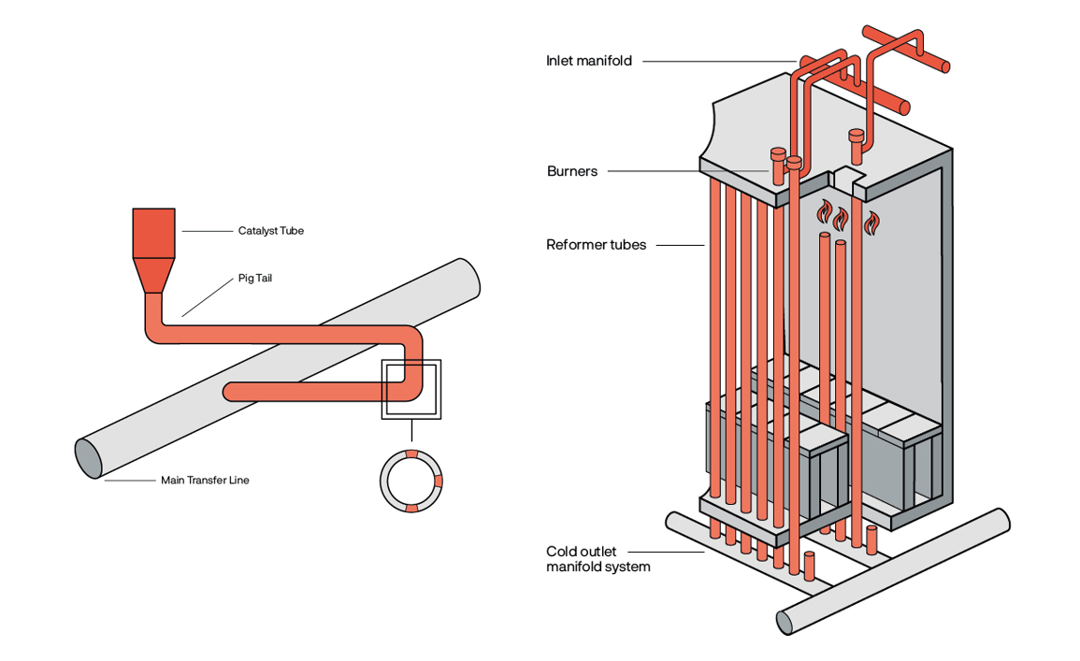
Steam methane reforming (SMR) remains the most widely used method of hydrogen production globally. At its core is the reformer, a high-temperature system where natural gas reacts with steam to produce hydrogen.
In SMR systems, some of the biggest reliability risks sit in components that receive the least attention. One of them is the pigtail.
As the name suggests, pigtails are curved pieces of pipe that carry reformed gas from catalyst tubes to the collection manifold. Their function is to discharge the mechanical stress and displacement experienced by the reformer unit system because of the thermal expansion resulting from the reforming process. Located in the inlet and the outlet of the reformer, pigtails are susceptible to a range of mechanical and thermal stresses and potential failures.
When they fail, the consequences are immediate, with potential shutdowns, safety implications and production losses.
Material selection sits at the centre of managing these challenges and increasing the service life of pigtails. Grain size is a critical part of that.
As grain size has a significant influence on the creep performance of pigtails, accurate grain size control is essential. ASTM B407 requires an average grain size of ASTM No. 5 or coarser, determined according to ASTM E112. However, ASTM E112 only defines the measurement method and does not address grain size distribution. For pigtail applications, Alleima can supply tighter grain size ranges, such as ASTM 2–4 or ASTM 3–5, to optimize creep resistance and long-term performance. In addition, grain size and grain size distribution can be further characterized using Electron Backscatter Diffraction (EBSD), providing a more detailed assessment of the microstructure. EBSD (ultimately) is the most suitable technique for the grain size characterization / distribution of this material.
Grades for pigtails
| Inlet Pigtails (550 - 600° C) | Outlet Pigtails (850 - 900° C) |
Sanicro® 31HT offers high strength and excellent structural stability at elevated temperatures, combined with very good ductility. The most common applications for this grade are pigtails and headers in plants producing synthesis gas for ammonia, methanol, and town gas.
In addition, Alleima can, upon request, ensure tight control of grain size—extending pigtail lifetime, enhancing operational reliability, and improving steam reformer efficiency.
Support
For more information on high temperature reformer applications and pigtail performance, material selection, and how grain size can significantly improve creep resistance and give longer service life, contact the Alleima team.